



Sometimes the most powerful conversations don’t come from highlight reels or polished success stories. They come from honesty. From the moments in between. From what happens when things don’t go to plan.
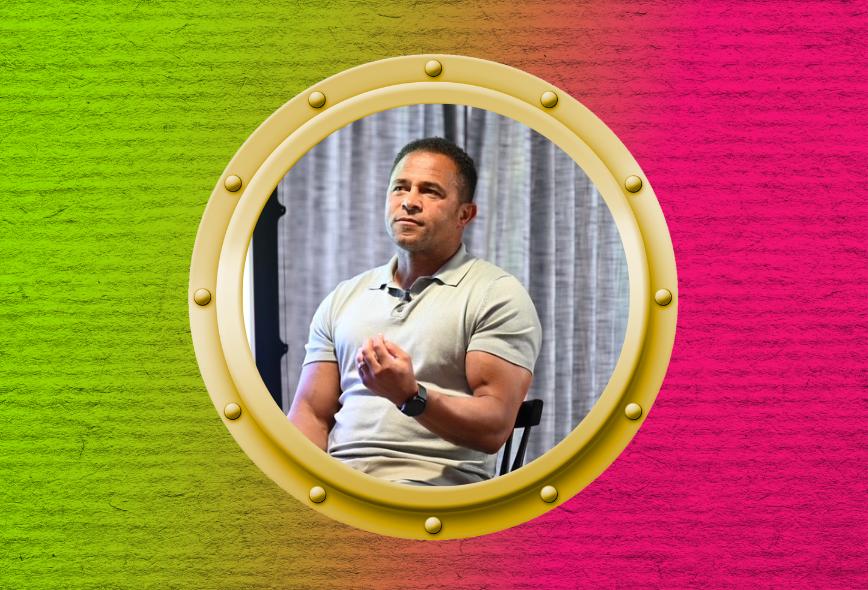
At the latest Meet for Good event, former England international rugby player Luther Burrell delivered exactly that. A conversation that went far beyond sport and into leadership, culture, resilience and what it really means to be a teammate.
A community built on purpose
Before Luther took the stage, the evening itself was a reminder of what Meet for Good is all about.
Fresh from being named the UK’s best SME networking group, the community continues to prove that connection can go beyond introductions and into meaningful impact. And it set the perfect tone for what followed.
From Huddersfield to the international stage
Luther’s story starts in Huddersfield, in a working-class family where opportunities were limited and role models even rarer. Rugby changed that. Not because of trophies or recognition, but because of what it gave him: structure, discipline and a sense of direction.
His sporting abilities carried him from a dual rugby league and union pathway into a professional career, culminating in Premiership and European titles with Northampton Saints and an England debut in 2014.
But as Luther made clear, success in elite sport is rarely as straightforward as it looks from the outside.
The reality behind performance
One of the biggest takeaways from the evening was a simple but powerful truth. That performance isn’t optional.
While many of us talk about motivation, Luther reframed it entirely. Motivation comes and goes. Standards do not.
High-performing teams aren’t driven by talent alone. They’re driven by consistency, accountability and shared expectations.
When culture breaks down
In one of the most candid parts of the conversation, Luther spoke about the challenges he faced later in his career, including experiences of discrimination that ultimately led him to step away from the game.
What followed was a difficult but defining period. Speaking out led to a formal investigation and wider scrutiny across the sport, revealing that a significant proportion of players had experienced some form of discrimination.
What great teams actually look like
Luther’s time at Northampton Saints showed the opposite. The team was built around respect, accountability and collective responsibility.
Everyone mattered. From international players to support staff. Players cleaned their own changing rooms. Leadership was shared. Success was a by-product, not the singular aim. It came from leadership at every level, from coaches to players, reinforcing the same behaviours every day.
The best teammates aren’t always the most talented
When asked who embodied the idea of the ‘best teammate’, Luther didn’t point to the flashiest players or biggest names.
He spoke about consistency. Sacrifice. People who turned up and delivered, day after day, for the good of the team.
It’s a powerful reframing, especially in environments where individual performance often takes centre stage.
Purpose beyond the pitch
Since retiring, Luther has channelled those lessons into the Twelve Foundation, inspired by his own journey and the realisation that many young people still lack access to opportunity and role models.
The goal is simple but ambitious: to reach thousands of children, particularly in underprivileged communities, and use sport as a vehicle for confidence, connection and growth.
The takeaway: standards set the tone
To close, Luther left the audience with one question:
Are you operating as individuals, or as a team with shared standards?
Because in the end, that’s what defines performance. Not strategy. Not talent. Not even motivation. But the expectations you live by every single day. And whether you’re willing to uphold them, even when no one is watching.