



What can business leaders learn from the most scrutinised role in sport?
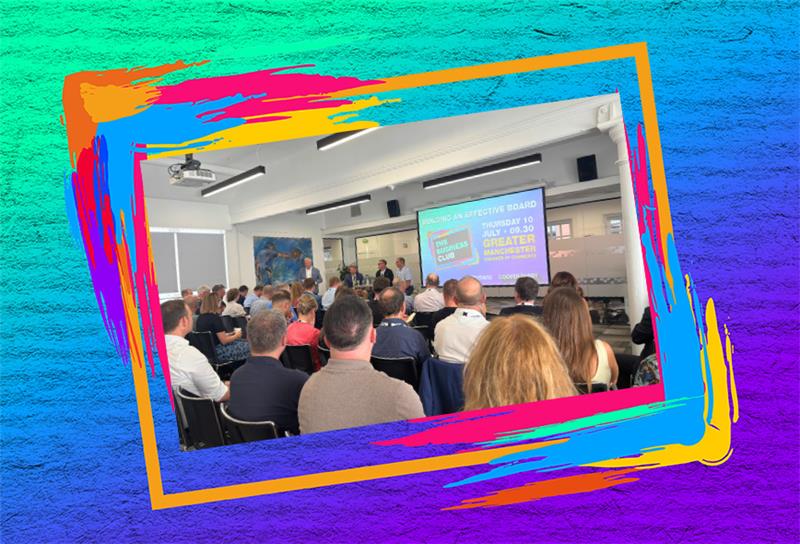
At December’s Business Club event in Manchester, we explored exactly that with Anthony Taylor—the Premier League and FIFA-listed referee whose job demands split second judgement, psychological resilience and elite teamwork, under a global microscope every week.
Hosted at X+Why, 100 Embankment and co-created with partners Bermans, HSBC and Meet For Good, the session brought together business leaders to two-foot the crossover between elite sport and business.
Taylor’s CV is like a greatest hits compilation of modern football: hundreds of Premier League matches, World Cup fixtures and high profile finals. Before life on the pitch, he served as a prison officer, adding a unique dimension to his perspective on leading under pressure and managing complex human dynamics.
“We’re some of the most hated people in the world”
Taylor kicked off with self aware honesty and a dose of humour: “We’re some of the most hated people in the world; everyone blames our mistakes… But going out onto the pitch, it’s like getting in the ring with Tyson Fury.”
That line set the tone for a session grounded in lived experience and incredible stories. In refereeing, pressure isn’t a one off spike at the weekend; it’s relentless and cyclical. He described the 3-4 day analysis loop that follows every match – quantitative and qualitative review systems dissect each decision – before the next game demands focus all over again. Even without VAR in your meeting rooms, the parallels to quarterly targets, board updates and stakeholder scrutiny were clear to see.
That said, Taylor’s core thesis was people-first high performance. In both sport and business, KPIs and targets matter – but resilience and longevity matter more. One brilliant day isn’t “world class”; sustained excellence is. “To be the best under pressure, you need to bring the best out in your team,” he said. That shift – from metrics to developing people – lands differently when you hear it from someone whose every decision is televised and debated by hundreds of millions of households worldwide.
Building teams of leaders (not followers)
One of Taylor’s many leadership examples featured Carlo Ancelotti, a manager renowned for calm authority and a cigar-smoking ‘coolness’. In a Champions League tie where Real Madrid were minutes from elimination against Man City, Ancelotti didn’t default to top down control. Instead, he asked senior players Marcelo and Toni Kroos what they would do. The response turned the game – and the tie. Cue blue tears.
For Taylor, the lesson is clear: great leadership isn’t about always having the final answer; it’s about creating a culture where leaders rise at every level.
That ethos popped up time and time again. Quality teamwork equals quality decision making; leaders share responsibility; and in elite environments, confidence and comfort to contribute must be deliberately cultivated.
Taylor referenced the All Blacks’ “no dickheads” mantra and the arrowhead formation of geese, where everyone takes the lead in turn – a memorable analogy for building distributed leadership over multiyear cycles. Slow, compounding gains beat one off heroics. And you might just end up winning your equivalent of the Rugby World Cup.
Decision making under fire
“Matchday feels like jumping out the back of a helicopter,” Taylor said. “I haven’t got a clue what’s going to happen over the next 90 minutes.”
In other words: you can prepare meticulously, but uncertainty is the default. He illustrated the subjectivity inherent in complex decisions with a Manchester derby incident featuring Marcus Rashford (in an offside position without touching the ball) and Bruno Fernandes scoring.
Even well informed fans struggle with edge cases; the laws of the game define “interfering with play” as playing or touching the ball, not merely standing offside, reminding us that context and definitions matter more than reactive certainty.
Nuance beats binary thinking – especially when stakes and visibility are high. And that’s just as relevant to your business as a Premier League clash of the Northwest titans.
Taylor was equally candid about technology. Fans imagined VAR would deliver utopia: perfect consistency, zero errors, common sense that aligns with the laws.
Reality is trickier. VAR is a process, not a panacea; humans operate it; speed and angles distort perception; and “consistency vs common sense” is often a trade off, not a harmony. He referenced the Liverpool–Spurs incident (Luis Díaz’s disallowed goal) as a process failure, not bias – the on field decision status wasn’t properly established, so checks were misapplied.
It’s a potent reminder for business leaders: if your decision framework is flawed, adding more data or oversight won’t fix the root cause.
Resilience: insulating yourself from toxicity
The modern game is a pressure cooker. Managers under fire after five fixtures; players vilified; owners blamed; referees pilloried. Taylor’s coping mechanism? Selective isolation from unproductive noise – stepping back from social media, skipping post match punditry dissections, and building a bubble of self belief rooted in preparation and peer feedback.
That isn’t avoidance; it’s mental load management. And it resonates for leaders facing investor chatter, media scrutiny or internal storms: protect cognitive bandwidth, or performance will take a downturn.
The darker side of scrutiny surfaced in the story of the Roma vs Sevilla European final – Taylor’s self-labelled toughest assignment. Cultural clash, “win at all costs” mindsets, double digit yellow cards, and public blame with Jose Mourinho as the ringleader.
Abusive messages flooded his phone; even LinkedIn wasn’t spared; family members were harassed at the airport. The point wasn’t shock value; it was a plea to de-normalise abuse and recognise how constant hostility corrodes performance environments. Leaders shape the climate. Zero tolerance for toxicity must be non negotiable.
When there is no playbook: the Eriksen incident
Taylor’s most human story came from Euro 2020, when Christian Eriksen suffered a cardiac arrest on the pitch.
There was no protocol for a moment like that. Simon Kjær, Denmark’s captain, recognised what had happened and initiated CPR immediately. While medics worked, Taylor had to balance ultimate responsibility for the environment with impossible unknowns: Was Eriksen alive? Would the game continue?
In the end, the decision to create time and space, prioritise people, and then respect players’ wishes to complete the match underscored a core leadership truth: processes matter, but in true crisis, humanity comes first.
That human-centred lens extended to team dynamics, too. One of Taylor’s colleagues had lost his mother two weeks before the tournament – an invisible burden amid the noise. Another conversation with Kjær ended with “I can’t carry on; it’s too much.” In elite settings, leaders must notice the hidden variables – grief, fatigue, fear – and adjust expectations accordingly. Performance at the top isn’t a single act; it’s a chain of decisions that consider impact on people at every step.
Speed, physics and the limits of slow motion
The speed of the Premier League has risen dramatically in recent years. Taylor suggested roughly 25% faster dynamics, amplifying the challenge of real time judgement.
Slow motion replays can strip the physics and make challenges look worse than at match speed; yet watching only in real time risks missing details. In both refereeing and business, leaders must blend fidelity and pragmatism: use the right tool at the right speed, and accept that perfect consistency is often incompatible with common sense in complex, human systems.
Fear, imagery and the psychology of winning
Taylor’s reflections drifted into the psychology of elite sport: Muhammad Ali bringing specialists into his camp to sharpen the mental game; Usain Bolt’s mental imagery – winning the race before the blocks explode.
For leaders, the takeaway is practical: pre experience high stakes moments through rehearsal, scenario planning and visualisation. If you’ve already “lived” the pitch invasion, the big launch, the hostile Q&A – in your mind and in drills – you’ll handle it calmly when it arrives.
One line lingered: “No fear. Feel invincible.” A trained state built from preparation, shared standards and trust. Taylor also quoted, “The true meaning of life is to plant trees, under whose shade you do not expect to sit.” High performance cultures play a long game, compounding small behaviours (feedback loops, humility, discipline) into outsized outcomes.
Anecdotes that stick (and why they matter)
Not all lessons came from finals. There was the Serbia vs Albania “drone match”, where a flag of “Greater Albania” descended onto the pitch and chaos unfolded – objects thrown during the national anthems, invasions, garden furniture strewn like a B&Q summer sale, and, ultimately, abandonment when Albania refused to continue.
Taylor’s decision making cascade was anchored in safety, communication and staying close to captains (his logic: “They’re not going to throw a brick at their captain, are they?”). In highly volatile business moments – PR crises, legal disputes, market shocks – the analogues are obvious: protect people, communicate clearly, and work through trusted nodes to stabilise the situation.
Another thread ran through the room: banter and tribal allegiance – United vs City, VAR “tests” with fans, and playful digs about late trains from Euston directed at the room’s Red Devils.
Humour, when well timed, defuses tension and fosters psychological safety. Leaders who can read the room and lighten the load without trivialising stakes create headspace for better decisions.
A final challenge from the middle of the pitch
Taylor closed with questions that apply to any team, not just twenty two players and a global audience: How do you lead? How do you motivate people? How do you help them be more resilient? How do you help them achieve excellence?
The Business Club audience left with more than stories; they left with models and mindsets they can put to work on Monday morning – regardless of how their team fared at the weekend.