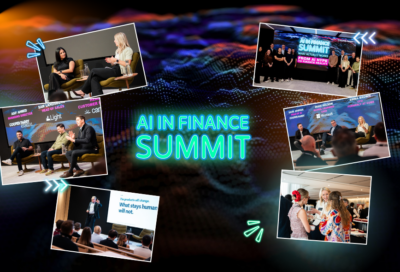




At this year’s CFO Forum, held in partnership with Founders Forum, CFOs and senior finance leaders from across the high-growth ecosystem came together to discuss the challenges shaping the future of finance leadership.
One message rang true throughout the day: the CFO role is expanding faster than ever before.
AI, shifting capital markets, evolving investor expectations and increasing organisational complexity are redefining what businesses need from their finance leaders. Today’s CFOs are expected to do far more than oversee reporting and compliance. They’re responsible for driving strategy, allocating capital, leading transformation and helping businesses navigate growth.
Across the day’s discussions, we highlighted five key challenges facing CFOs as they look ahead to 2027.
Strategy, Operations and Capital: The New CFO Brief
We’re seeing more and more of the most successful modern CFOs acting as the organisation’s internal investment committee, helping determine where capital should be deployed to generate the greatest return.
This means influencing decisions across product, technology, sales, operations and people, not just finance.
As high-growth businesses scale, complexity increases. Materiality thresholds evolve, decision-making frameworks change and what worked at one stage of growth can quickly become ineffective at the next. The challenge for CFOs is striking the balance between strategic leadership and operational execution, all while maintaining discipline around capital allocation.
The role’s influence has also grown significantly over the last two decades, with finance leaders now playing a central role in shaping culture, driving transformation and steering long-term business strategy.
Beyond Automation: The Real AI Challenge
No topic generated more discussion than AI.
Finance teams are already seeing tangible benefits from AI in forecasting, scenario planning, reporting, stakeholder communication and data analysis. Tasks that once took days or weeks can now be completed in hours, meaning finance functions can drive greater impact with leaner teams.
The real constraint is talent. As AI capabilities continue to advance, finance professionals must become more adaptable, commercially minded and capable of validating AI-generated outputs. While the technology can enhance productivity, financial judgement, governance and critical thinking remain essential.
Remember, CFOs cannot delegate AI transformation. Leaders must understand the opportunities, risks and practical applications of AI in finance if they are to unlock its full value.
Growth Capital Has a New Rulebook
While funding markets have improved, investor expectations have fundamentally changed.
Investors are increasingly expecting businesses to demonstrate strong unit economics, capital efficiency, scalability and a credible path to profitability.
As a result, CFOs are taking a more sophisticated approach to capital strategy.
Discussions explored the growing range of funding options available to scaling businesses, from venture debt and structured financing to traditional equity investment. Finance leaders are now expected to understand how different funding structures support different growth objectives, while carefully managing dilution and maintaining strategic flexibility.
The consensus? Successful CFOs are becoming more creative in how they build and manage capital structures, while maintaining transparency with boards, investors and lenders.
The Rise of Secondaries and Shareholder Liquidity
Venture-backed companies are staying private for longer. Great for growth. Less great if founders, employees and early investors are waiting years to unlock value.
That’s why secondary transactions are climbing the CFO agenda. Fast.
Done right, they can be a powerful tool. They reward and retain key people, create liquidity without forcing an exit, and allow early investors to recycle capital into the next wave of ambitious businesses.
At the same time, secondaries bring fresh challenges around governance, valuation, shareholder dynamics and how future investors will view the cap table.
Modern finance leaders are finding that managing shareholder liquidity is every bit as important as managing cash flow. Because when stakeholders have a clear route to value, everyone stays focused on building what’s next.
Leadership and Influence Still Matter Most
Funding. Capital markets. They were all hot topics. But leadership was the theme that kept resurfacing throughout.
Whether the conversation was about managing investor expectations, navigating boardroom dynamics, supporting founders or building high-performing teams, the best CFOs were seen to be leading that change – not just reporting on it.
Technical expertise will always matter. But the finance leaders making the biggest impact are the ones who can bring people with them, challenge thinking in the right way and build trust across the business and beyond.
The modern CFO is a strategist, adviser, problem-solver and catalyst for growth. So yes, the role is getting bigger. But so is the opportunity to create value far beyond the finance function.
Looking Ahead
If CFO Forum 2026 proved anything, it was that the future CFO must be part strategist, part operator, part technologist and part leader.
AI will continue to transform finance functions. Capital markets will evolve. Investor expectations will shift. Yet the finance leaders who thrive will be those who successfully combine financial rigour with commercial judgement, adaptability and influence.
In the coming months, we’ll explore each of these themes in more detail, including AI in finance, capital strategy, shareholder liquidity, leadership and the evolving role of the CFO in scaling businesses.
Continue the Conversation
These conversations don’t end when the forum does.
Whether it’s AI adoption, capital strategy, shareholder liquidity or preparing for the next stage of growth, CFOs are navigating increasingly complex decisions. If any of the themes discussed resonate with your business, we’d be delighted to continue the conversation. Get in touch with the Cooper Parry team to explore how we’re helping ambitious businesses and finance leaders tackle the challenges ahead.